Crochet Info
A hairpin loom is often used to create lacy and long stitches, known as hairpin lace. While this is not in itself a hook, it is a device used in conjunction with a crochet hook to produce stitches.
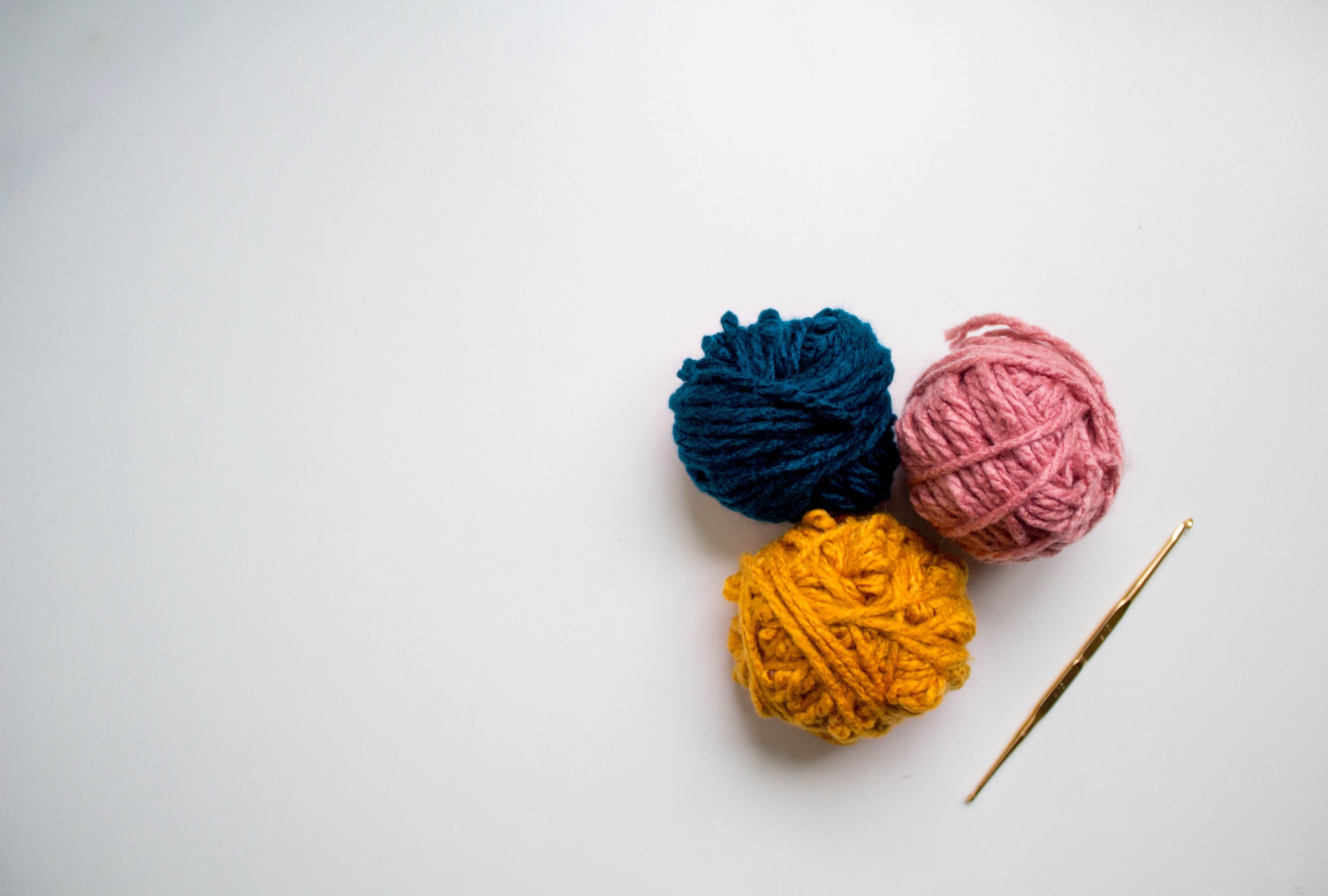
Before use, hanks are wound into balls in which the yarn emerges from the center, making crocheting easier by preventing the yarn from becoming easily tangled. The winding process may be performed by hand or done with a ballwinder and swift.
The dyeing of yarns is a complex art. Yarns need not be dyed; or they may be dyed one color, or a great variety of colors. Dyeing may be done industrially, by hand or even hand-painted onto the yarn. A great variety of synthetic dyes have been developed since the synthesis of indigo dye in the mid-19th century; however, natural dyes are also possible, although they are generally less brilliant. The color-scheme of a yarn is sometimes called its colorway. Variegated yarns can produce interesting visual effects, such as diagonal stripes.
There are six main types of basic stitches (the following description uses US crochet terminology which differs from the terminology used in the UK and Europe).
The more advanced stitches are often combinations of these basic stitches, or are made by inserting the hook into the work in unusual locations. More advanced stitches include the shell stitch, V stitch, spike stitch, Afghan stitch, butterfly stitch, popcorn stitch, cluster stitch, and crocodile stitch.
In the English-speaking crochet world, basic stitches have different names that vary by country. The differences are usually referred to as UK/US or British/American. Crochet is traditionally worked off a written pattern in which stitches and placement are communicated using textual abbreviations. To help counter confusion when reading patterns, a diagramming system using a standard international notation has come into use (illustration, left).
Posted By Alexandra